- shotcut-linux-x86_64-26.8.1.AppImage 210 MB 4.2k downloads
- shotcut-linux-x86_64-26.8.1.txz 148 MB 2.6k downloads
- shotcut-macos-26.8.1.dmg 199 MB 48k downloads
- shotcut-win64-26.8.1.exe 155 MB 67k downloads
- shotcut-win64-26.8.1.zip 215 MB 11k downloads
- shotcut-win_ARM-26.8.1.exe 117 MB 5k downloads
- shotcut-win_ARM-26.8.1.zip 158 MB 1.2k downloads
Video editor for Windows Install
A video editor lets you open clips on your PC, arrange them on a timeline, trim and filter, then export a new file without uploading the masters to a random site. This guide installs Shotcut on Windows x64 from GitHub Releases or the verified winget package Meltytech.Shotcut. Official site: shotcut.org.
- Windows x64 installer from the official GitHub release
- GPLv3 local timeline. Meltytech publishes Shotcut.
- Portable zip and Windows ARM builds sit on the same tag
By Reel Quill editorial team Current release, published August 1, 2026
Install Shotcut 26.8.1
Windows
Paste into PowerShell or Windows Terminal:
winget install -e --id Meltytech.ShotcutPackage: microsoft/winget-pkgs Meltytech.Shotcut (Inno; GitHub InstallerUrl for shotcut-win64-*.exe).
Or download the file directly from the official GitHub release:
Download Windows x64 installer (.exe)Also on this release: Windows x64 portable zip, Windows ARM installer (.exe), Windows ARM portable zip
Windows 10 build 1809 or later, or Windows 11, on Intel/AMD x64 for the primary exe. Windows ARM exe/zip sit on the same tag. Last Windows 7/8 build is an older tag (an older vendor tag for Windows 7/8) on the vendor download page.
Every file comes from mltframework/shotcut v26.8.1 on GitHub, the project's own release, unmodified.
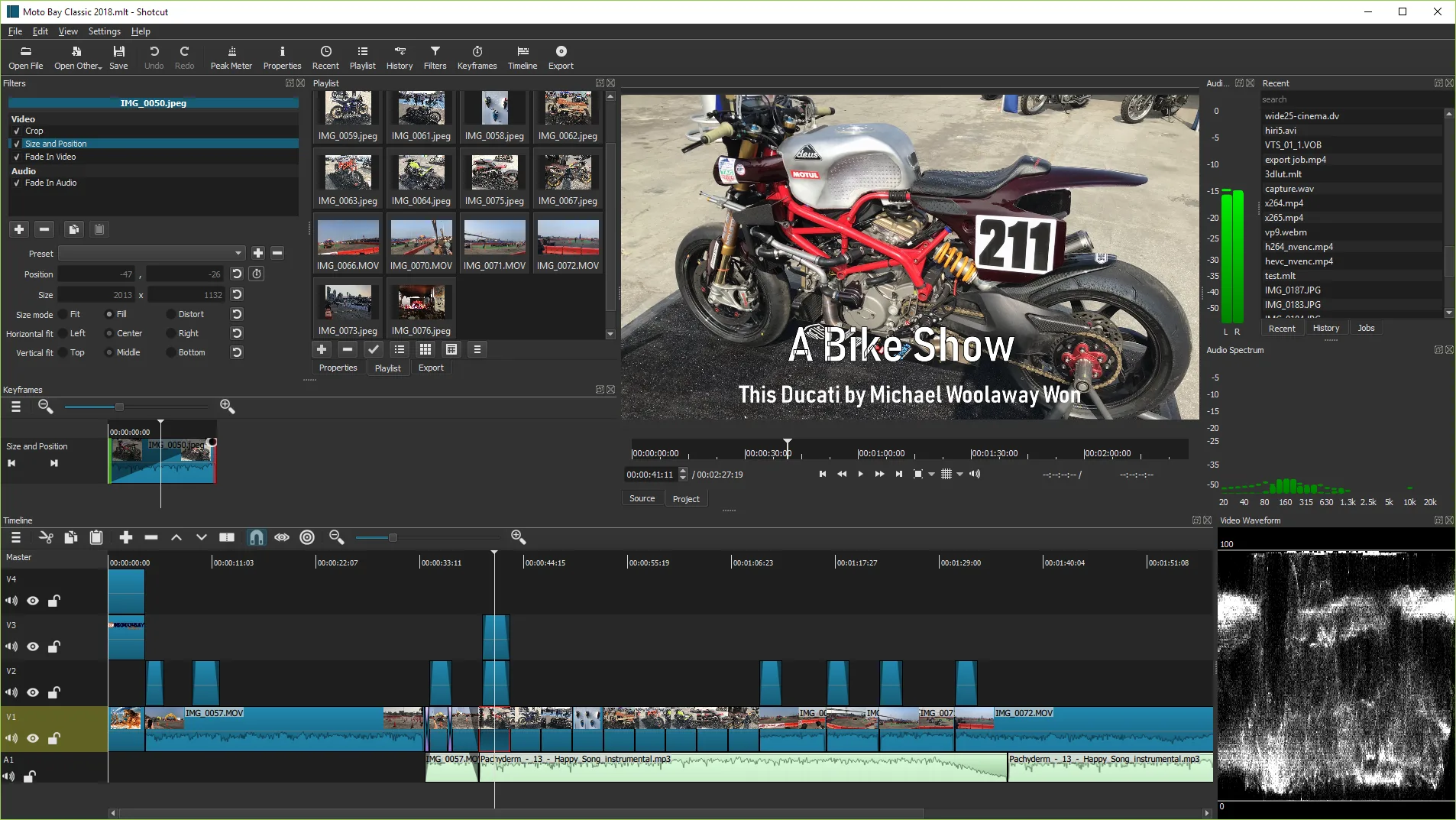
What a video editor does on your PC
A video editor is software you install and run locally. You open camera files, screen recordings, or stills, place them on a timeline, cut bad takes, add simple filters or titles, then export a finished file to a folder you control. People search for a video editor when the phone trimmer is too shallow, when a class project needs titles, or when a screen recording needs a clean middle section before sharing.
Shotcut fills that video editor role here. Meltytech publishes it under GPLv3 with source on GitHub at mltframework/shotcut. The Windows x64 installer on each release is named shotcut-win64-*.exe. The same tag also lists a Windows x64 zip, Windows ARM exe/zip, macOS dmgs, and Linux AppImage/txz. This guide keeps the Install panel on Windows because that is the primary slot for this guide.
You do not create an account to cut a local project. Media stays on the disk unless you export and upload later. Project files use the MLT XML .mlt format. Longer Windows notes: install video editor on Windows. Machine chooser: for this computer.
How a timeline video editor job runs
After install you open Shotcut, add clips to the Playlist, drag them to the Timeline, set in and out points, and stack filters when you need colour, audio, or text work. The Export panel writes a new file with a preset you pick. A video editor earns trust when those steps stay predictable from one project to the next.
Hardware encode options appear when your GPU and drivers support them; read current Shotcut docs rather than copying a random bitrate tip. The Activity log helps when an export fails. First-hour checklist: installed. First project walkthrough: edit video.
Why Shotcut for this video editor install
GPLv3, no paid seat
COPYING is GNU GPL v3. Local video editor exports need no Shotcut account or subscription unlock.
Windows x64 primary door
Prefer shotcut-win64-*.exe or winget id Meltytech.Shotcut. Portable zip and ARM builds remain on the same tag.
Honest package ids
Brew cask shotcut, Flatpak org.shotcut.Shotcut, and Snap shotcut are verified for other OS guides; they are not InstallPanel tabs here.
Safe fetch notes: download safely. Release file map: releases. Repo layout: GitHub.
Install paths for this video editor
| Path | Command or file | Source | Notes |
|---|---|---|---|
| Windows x64 (primary) | winget install -e --id Meltytech.Shotcut | microsoft/winget-pkgs | Windows install |
| Windows x64 installer | shotcut-win64-*.exe | GitHub Releases | Inno Setup; same family winget wraps |
| Windows x64 portable | shotcut-win64-*.zip | GitHub Releases | portable zip |
| Windows ARM | shotcut-win_ARM-*.exe / .zip | GitHub Releases | Same tag; pick ARM when the PC is ARM |
| macOS (documented) | brew install --cask shotcut | Homebrew cask | macOS guide |
| Linux (documented) | Flatpak / Snap / AppImage | Flathub, Snapcraft, GitHub | Linux guide |
Winget howto when App Installer is missing: how to install winget. Winget-only walkthrough: video editor winget.
Eight steps to a first export
- Open the current GitHub release or winget Open the current mltframework/shotcut release, or confirm App Installer so winget can resolve Meltytech.Shotcut.
- Take the Windows x64 installer Download shotcut-win64-*.exe for a normal install, or use winget install -e --id Meltytech.Shotcut.
- Run the Inno installer Allow the Inno Setup installer when Windows asks. Choose the current-user or all-users scope the dialog offers.
- Launch the video editor Open Shotcut from the Start menu. Confirm the playlist, timeline, and export panel appear.
- Open a short clip and drop it on the timeline File → Open or drag a short clip into Playlist, then drag it onto the timeline and scrub once.
- Export one throwaway take Open Export, keep a simple preset, Export File to a new folder, and confirm the file plays.
- Keep the same update door Return to GitHub Releases or winget Meltytech.Shotcut for later updates. Skip renamed portal setups.
- Save the project File → Save As and keep the .mlt project beside your media when you want to reopen the cut.
Keep masters untouched. Export to a new name every time. If SmartScreen blocks a fresh build, use More info and confirm the Meltytech publisher when Windows shows it. Safety overview: is this video editor safe.
First hour after the video editor installs
Success is one short export you can play back, not three download folders of renamed setups. Open a clip you can discard, place it on the timeline, cut a few seconds, export once, then save the .mlt project if you want to reopen it. Preferences for theme and GPU processing can wait until that first file works.
Habit notes: first run. Export presets: export MP4. Troubleshooting: troubleshooting.
How to choose a video editor
- Choose a local GPLv3 video editor when you want timeline control without a cloud seat.
- Keep the built-in Photos or Clipchamp tools when a one-tap trim is enough.
- Pick a heavier commercial suite when your shop already standardises on that suite.
- Use a dedicated trimmer or compressor when you only need those jobs — those intents live on other hosts.
Switching notes: switch from built-in editor. Comparison: vs built-in video editor. Online editors comparison: video editor vs online.
Shotcut compared with other video editor options
| Option | Cost model | Open source | Best when |
|---|---|---|---|
| Shotcut | Free GPLv3 | Yes | You want a local timeline video editor with verified Windows packages |
| Built-in Windows editors | Bundled | No | You only need light trim or captions |
| Online editors | Free tier / subscription | Usually no | You accept uploading media for a quick cut |
| Heavier commercial suites | Paid / freemium | No | Your team already trains on that suite |
This table is a fork in the road, not a scoreboard. Link each vendor from their own docs when you compare features in depth.
Mistakes that waste a video editor install
- Grabbing a renamed setup from a download portal instead of GitHub or winget Meltytech.Shotcut.
- Installing ARM and x64 builds on the wrong machine.
- Overwriting the only master file during export.
- Mixing portable zip and installed copies without noting which one you update.
- Chasing GPU flags before a simple software export works.
Fix each mistake the same way: one honest door, one proof export, one documented update path.
Files on the current release tag
The current mltframework/shotcut tag lists Windows x64 exe and zip, Windows ARM exe and zip, macOS dmgs, Linux AppImage and archive, plus source and checksum files. This guide treats the Windows x64 exe as the primary install door. Checksums on the tag help when you want to hash a download. Ignore unsigned macOS builds unless you already know why you need them.
Winget Meltytech.Shotcut points its InstallerUrl at the same Windows x64 exe family. Brew cask shotcut tracks the macOS dmg. Flatpak org.shotcut.Shotcut and Snap shotcut cover Linux store installs. AppImage remains the classic Linux single-file option from GitHub. Document which door you used on the machine ticket so the next update does not mix zip and winget copies by accident.
What stays local during a cut
Playlist media paths, timeline edits, and export output stay on disks you choose. Shotcut does not require a Meltytech account to open a clip. Filters and transitions render on the machine. If you later upload an export to class portals or social apps, that upload is a separate step you control after the file lands in your folder.
Keep originals in a read-only folder when you can. Export with a new name. Save the .mlt project when you expect to reopen the cut. Proxy and cache settings matter on large 4K jobs; start with a short 1080p clip for the first proof so you learn the panels before you chase performance toggles.
When a lighter tool is enough
Built-in trimmers win for a one-cut story reply. Online tools win when you cannot install software and accept an upload. Dedicated compressors and trimmers win when those are the only jobs. Shotcut wins when you want a free local timeline with filters, multi-track edits, and GPLv3 source you can inspect.
Adjacent products for pure trim or compress live on other sites in this network. This guide stays on the broader edit job: open, arrange, filter, export. That focus keeps titles and guides from colliding with those neighbouring intents.
Update and uninstall habits
For winget installs, winget upgrade Meltytech.Shotcut pulls the newer package when winget-pkgs has caught the tag. For exe installs, download the newer shotcut-win64-*.exe and run it over the existing install. For portable zip, extract to a fresh folder and retire the old folder after you copy settings you still need.
Uninstall from Windows Settings → Apps for Inno installs, or remove the portable folder for zip layouts. Confirm Start menu shortcuts and desktop icons are gone before you archive project folders. Update notes: update and uninstall.
Classroom and shared PC notes
Shared lab images should pin the install door beside the OS version: winget id Meltytech.Shotcut or the GitHub exe name pattern. After each reimage, run one proof export before calling the station ready. That catches missing Visual C++ runtimes, blocked SmartScreen prompts, and leftover portable folders from old profiles.
Travel laptops benefit from the portable zip when you lack admin rights, with the trade-off that updates are manual. Family PCs usually prefer the normal exe or winget so Start menu search finds Shotcut next to other apps. Write the chosen door on the machine ticket either way.
Export targets people ask about
Most first exports use a simple MP4 preset from the Export panel. That covers class uploads, chat clips, and local archives. You can change resolution, frame rate, and audio bitrate after a preset loads. Keep the master timeline project so you can re-export without rebuilding cuts. Dedicated MP4 notes: export MP4.
If you only need a smaller file and never need titles or multi-track work, a dedicated compressor may fit better on its own host. If you only need a tight trim with no filters, a dedicated trimmer may fit better elsewhere. This video editor path stays on the full timeline job so those neighbouring intents do not collide here.
Subtitles, stabilisation, and chroma tools exist as filters when you need them. Learn them after the first proof export. A calm first hour beats a pile of unfinished filter experiments on a shared PC.
Trust signals worth checking
Confirm the GitHub org is mltframework/shotcut, the winget id is Meltytech.Shotcut, and the homepage field on the repo points at shotcut.org. Hashes on the release tag match the files you download when you want extra assurance. SmartScreen warnings on brand-new builds are common; read the publisher name before you continue.
Reel Quill only documents install doors. Meltytech remains upstream. When release asset names change, re-check the live tag before you reimage a lab. Safety deep dive: is this video editor safe. Editorial process: editorial policy.
Keeping the video editor name clear
Here video editor means a local timeline app you install and run. A review portal that only ranks for the head term is still the wrong binary. Prefer shotcut-win64-*.exe, winget Meltytech.Shotcut, then prove one export before you batch filters.
When someone pastes a random best video editor download link into chat, ask for the GitHub Releases URL instead. The install path on this guide always returns to mltframework/shotcut.
Paid suites still win when a shop already trains on them. Browser-only editors still win when install rights are missing. Choose this video editor path when you want GPLv3 builds, exact Releases names, and a local timeline.
More video editor how-tos
Install guides cover Windows, macOS, and Linux. How-to guides cover first run, export, winget, portable zip, and troubleshooting. Compare and switch pages help when a built-in or online editor is already in play. Browse all: guides.
Official releases
All releases on GitHub- GitHub stars
- 15,229
- Downloads, last 3 releases
- 396k
- Latest version
- 26.8.1
26.6.25
v26.6.25
- shotcut-linux-x86_64-26.6.25.AppImage 188 MB 3.6k downloads
- shotcut-linux-x86_64-26.6.25.txz 127 MB 2.3k downloads
- shotcut-macos-26.6.25.dmg 179 MB 35k downloads
- shotcut-win64-26.6.25.exe 135 MB 61k downloads
- shotcut-win64-26.6.25.zip 195 MB 7.7k downloads
- shotcut-win_ARM-26.6.25.exe 95.4 MB 3.5k downloads
- shotcut-win_ARM-26.6.25.zip 136 MB 769 downloads
26.4.30
v26.4.30
- shotcut-linux-x86_64-26.4.30.AppImage 183 MB 4.7k downloads
- shotcut-linux-x86_64-26.4.30.txz 123 MB 1.7k downloads
- shotcut-macos-26.4.30.dmg 172 MB 48k downloads
- shotcut-win64-26.4.30.exe 121 MB 74k downloads
- shotcut-win64-26.4.30.zip 174 MB 9.1k downloads
- shotcut-win_ARM-26.4.30.exe 92.0 MB 5k downloads
- shotcut-win_ARM-26.4.30.zip 133 MB 1.3k downloads
Counts come from the GitHub API at build time and only cover the v* tags shown here. Package managers (winget, Homebrew, Snap, Flathub) and app stores are not included.
Keep the video editor habit boring: one door, one proof export, one update path. A second video editor copy on the same profile usually means a portal rename slipped in. Prefer the GitHub exe or winget id, then prove the video editor still exports after every bump. One video editor proof export closes the install ticket.
How do I install a video editor on Windows?
Download shotcut-win64-*.exe from the current mltframework/shotcut GitHub release and run the Inno installer, or run winget install -e --id Meltytech.Shotcut when App Installer is present. Prefer that Windows x64 door for this video editor path. Longer steps: install on Windows.
Where should I download this video editor?
Prefer GitHub Releases for mltframework/shotcut when you need the Windows exe, portable zip, ARM builds, macOS dmg, or Linux AppImage. Winget Meltytech.Shotcut, Homebrew cask shotcut, Flathub org.shotcut.Shotcut, and Snap shotcut are verified alternates. Skip Softonic-style wrappers. Details: download safely.
Is this video editor free?
Shotcut is free under GPLv3. GitHub release assets for the desktop builds have no paywall for local editing. Optional donations on shotcut.org support the project; they do not unlock timeline features. Licence text lives in COPYING on the repo.
Can I switch into this video editor from a built-in app?
Yes. Install Shotcut, finish one proof export, and keep the built-in tool available until the local timeline habit sticks. Guide: switch from built-in editor. Comparison: vs built-in video editor.
Does the desktop video editor work offline?
Yes for local editing after the program is installed. You still need network for the first download of the Windows exe, winget package, brew cask, Flatpak, Snap, or AppImage, then you can cut offline. Offline habits: first run and installed.